


Bindery departments and pressrooms in the colder climes can get a little chill in the air this time of year, especially on a Monday morning after a quiet weekend in the shop. The heat is turned down and the warmth of running pumps and motors is noticeably absent.
We know from basic physics that an object’s properties such as density, pressure, solubility, elasticity, etc are affected by temperature. Some temperature changes have dramatic impact. For instance, water freezes and turns from liquid to solid, and as it gets ever colder it expands with enough force to crack rocks. Engines need to be pre-heated as temperatures fall (or different viscosity oil introduced) otherwise the oil won’t circulate properly—the cold oil is denser and flows slower than warm oil. Cold oil plus the wrong viscosity can destroy an engine. Less obvious are changes in properties of things like steel. As it cools its appearance doesn’t change, but it becomes far more brittle.
Even the simplest of folding machines or other bindery equipment has many components of different materials, so there will be a change in the machine (and in the paper) with a change in temperature, which could be big enough to impact the job you’re running.
Ironically this cold-weather tip came to us last winter from sunny California. Will Weymouth of Western Trade Printing in Fresno was running a very light 4 pt. stock on his Stahl B19 equipped with Tri-Creasers. The job was running great on Friday afternoon but when he arrived Monday and started the folder, sheets immediately began ripping, with no changes whatsoever to the folding machine.
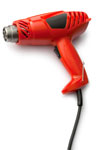 It had been a cold, rainy weekend and Will decided to test his theory that the climate may have had an impact on the performance of this particular folding job. While running the Stahl at idle speed he aimed a shrink wrap heat gun at the Tri-Creaser to warm up the insert for about 30 seconds. The problem disappeared with the first sheet and the job ran successfully the remainder of his shift.
The properties and performance of everything, including paper, changes with temperature. That’s one reason paper companies always recommend a certain amount of time to let a new shipment of paper acclimate to the shop environment. So if the shop temperature moves for instance, from 70 to 50 over the weekend a little pre-heat of the creasing tool might be in order, especially when dealing with papers a little outside the operating envelope for which the devices were intended. In the Fresno area it usually doesn’t get below 35 degrees, but in this case it was enough to affect the properties and performance of the materials involved.
Will also discovered that when attempting to crease text weight papers, a little pre-heat on the Tri-Creaser often improves performance, even at warmer temperatures. There’s not much room for error on thin stocks and a slightly softer insert may add just enough tolerance to make such difficult jobs possible. This technique may help too on stocks that are especially brittle.
Is there always a change in results with a temperature drop? Not necessarily. There are too many variables to make accurate predictions. Let’s just say that if your results differ with no apparent explanation, a short pre-heat is certainly worth a shot during these winter months.